
SME IT outstaffing as the silent engine for your business
Discover how SME IT outstaffing brings peace of mind back to your business operations. While you struggle with the local staff shortage, a flexible workforce of remote developers from Indonesia offers a down-to-earth, silent solution. No recruitment stress, just high-quality code for your projects.
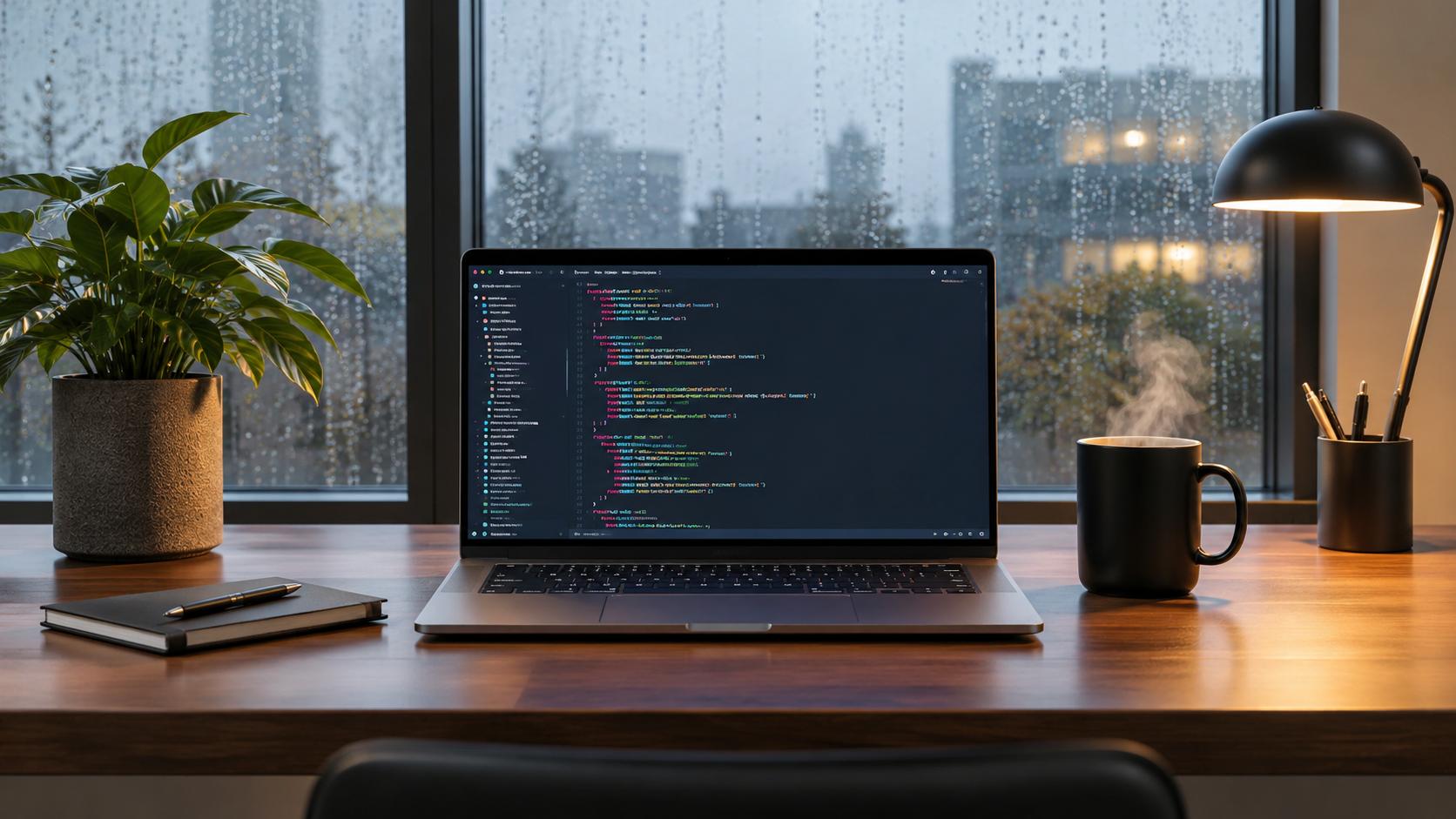
SME IT outstaffing in the morning and the unresolved issue
The first colleague usually doesn’t arrive until eight o’clock. I was there at a quarter past seven. The light in the hallway always flickers three times before staying on, a rhythm I now subconsciously expect. On my desk lay a notepad with yesterday’s to-do list. At the top, written in hasty letters, it said: consider SME IT outstaffing. This certainly wasn’t a brilliant insight, but it was a bitter necessity because the old way of recruiting simply wasn’t working anymore. No panic, just an observation in the silence of the office. Eventually, I just turned on the coffee machine. The device made a sawing noise, but at least the coffee was hot.
Large windows on the corner were slightly ajar, letting you hear the rush of the ring road. Outside it was a standard Tuesday, a day known for nothing other than having survived the heaviness of Monday. We were behind schedule with the new software release. Not dramatically so, but enough to feel that constant, dull pressure in the back of your head. The UWV predicted twelve thousand new jobs in the technology sector for this year. You read those figures and mainly think about who is going to do all that work. Such a thing doesn’t resolve a critical bug while you are standing frustrated in the morning rush hour.
Why the local shortage demands SME IT outstaffing
That is exactly the dry reality of the SME IT staff shortage in the Netherlands. This specific problem does not manifest itself in burning servers or angry mobs on the doorstep. The scarcity expresses itself much more subtly in the daily course of events. Often, it’s simply the silence of an office chair that remains empty for months. HR extends a vacancy for the fourth time, complete with a stock photo of a smiling team from which two people have since departed. Twenty-two percent of smaller companies see their growth directly hindered by this shortage, according to data on growth barriers due to staff shortages. Such a figure is not an abstract economic concept, but a hard missed deadline. Ultimately, it means a client who cancels on you because the promised feature simply isn’t finished.
Last week I had another such promising applicant on the phone. Without blinking, this developer asked for a salary that was fifty percent above our margin and immediately wanted to know if we had a weekly padel competition at the company’s expense. I told him that we primarily wanted to build a reliable and working product for our clients. After that, the conversation bled to death pretty quickly. Such moments always feel considerably longer than they actually are. You see, you have a clear vision for the platform. We had a realistic budget for development. There was even an enthusiastic email from sales about a big new client. The only thing missing was the desperately needed person to actually build the system.
The theory behind SME IT outstaffing as a flexible layer
That is why you slowly start looking for practical alternatives. During lunch, you read trade magazines about building a flexible IT layer. That term sounds like something you zip around a raincoat when it’s cold outside. Actually, the concept just means that you want to deploy people when the order book is full. You don’t want to bear high labor costs when the market takes a downturn and thus absorb project peaks without fixed wage costs. This is a completely logical thought. After all, nobody should have to pay for water when the tap is turned off. Yet, hiring independent freelancers always felt to us like a temporary, faltering band-aid. Increasingly, SME IT outstaffing is the lifeline for such companies.
Freelancers are usually there for a bit, do their defined thing, send a hefty invoice, and then leave for a larger client. What we were looking for was team spirit and continuity. We wanted to achieve this without the cramp of permanent contracts and the financial risk of long-term absenteeism. Our ideal developers had to truly understand the product. They had to think along about the architecture, without us losing months to onboarding and formal performance reviews. Ultimately, the chosen solution had to bring peace to the organization. We absolutely weren’t waiting for a new layer of administrative noise.
The down-to-earth choice for offshore software development
I looked outside again for a moment. A seagull landed on the rusted lamppost in front of the window and looked inside. It seemed to be waiting for the daily stand-up meeting. At that moment, the thought of offshore software development floated to the surface again. Years ago, we had tried something like that through an obscure agency that hardly understood the difference between outstaffing, outsourcing, and secondment itself. That trajectory ended in laborious communication through three different intermediaries. Our final code felt like a patched-up bicycle tire that went flat again at the first bump. But fortunately, the world has become smaller since then. Digital tools are more mature nowadays.
If my neighbor can arrange her parking permit in three seconds via a simple app, collaborating efficiently at a distance should also be possible. Technology no longer stands in the way of seamless contact with someone on the other side of the world. Location has long ceased to be the determining factor for success. Work culture, a clear connection, and strict agreements, on the other hand, make the real difference. We simply needed a reliable partner who had already done the heavy lifting of selection for us. Such a party separates the wheat from the chaff. Because of this, we could finally focus again on the substantive goals of the ongoing project.
Hiring remote developers without the usual noise
During my second cup of coffee, I opened the Mantab One website. This organization didn’t make flashy promises about a magical revolution in the tech industry. The model for SME IT outstaffing just sounded very down-to-earth and particularly practical. Mantab One connects European companies directly with high-quality talent from Southeast Asia. All available professionals are extensively tested beforehand on both technical skills and architectural insight. That process felt a bit like the new saucepan I recently ordered for home. You might expect some hassle with the delivery beforehand. Eventually, you put it on the stove and the material silently does its job.
Something like that suddenly made the idea of hiring remote developers much less abstract. Why would we continue to fight frantically in a local pond where every recruiter is already fishing with an oversized net? With their outstaffing model, you exclusively pay for the hours actually produced by the specialist. Fixed overhead costs are completely absent, and as an employer, you bear zero risk for potential sick leave. Moreover, they offer seamless integration into your organization via familiar Agile methods. Selected developers function as full-fledged, dedicated members of your own team. They simply sit a little further away from the coffee machine.
SME IT outstaffing as a silent solution
It is a strikingly strange sensation when you make such a business decision for the first time. You sign a document digitally. Then you expect a massive, immediately noticeable shift in the dynamics of the company. In practice, however, very little spectacular happens on the shop floor. That is, of course, exactly the underlying intention of the setup. SME IT outstaffing is supposed to be completely inconspicuous in daily execution. Fortunately, we no longer have to hold weekly board meetings about a faltering recruitment budget. New specialists simply participate in the planned sprints from day one. Only the technology takes center stage, absolutely not the peripheral matters.
That significant time difference quickly proved to be an unexpected tactical advantage. When I open my laptop early in the morning in that quiet office, the programmers have already completed half a workday. New pull requests are consistently waiting neatly in the repository for review. Something like that feels as if someone swept the street in front of your office unseen in the dead of night. You don’t physically see the labor process happening before your eyes. The delivered result, on the other hand, is crystal clear and unmistakably present in the systems. Our codebase is now growing steadily, without that restrictive stress we experienced locally every day.
The workday that just continues thanks to SME IT outstaffing
Of course, in practice, small things do sometimes go wrong. Last week, for example, we briefly misunderstood each other regarding the specific security requirements of a database migration. That misunderstanding was completely resolved the next morning in a video call of just five minutes. Nobody turned it into a bureaucratic drama. There was no endless chain of passive-aggressive emails between different departments. It remained a quick, professional correction of the code. This pragmatic approach reminded me of how I recently wrote a smudgy name in my child’s gym shirt with a waterproof marker. Ultimately, the result counts much more than the noise of the execution.
By the time the office really filled up, somewhere around a quarter to nine, most of the pressure was long gone. Landline phones started ringing here and there in the department. A colleague complained loudly about the persistent autumn rain during his bike ride. Someone else had unexpectedly brought fresh cookies for a work anniversary that we had all almost forgotten. Meanwhile, the digital project we had worried about for months was just running smoothly in the background. Sometimes the best business decision is simply one that you barely notice in the daily rhythm a month later. For us, SME IT outstaffing proved to be the key to that well-deserved peace of mind.